- Home
- Harbor notes
- Harbor views
Crossing notebook / 06
The harbor rearranges itself every minute
A ferry deck is a moving observation platform. Instead of fighting for one “best side,” follow the changing relationship among skyline, islands, working vessels and open water.
The Statue of Liberty becomes larger as lower Manhattan becomes flatter. Ellis Island shifts from a roofline to a complex of buildings. Ferries, tugs, barges and service craft interrupt the postcard. The crossing works best when visitors stop trying to freeze the harbor into one image.
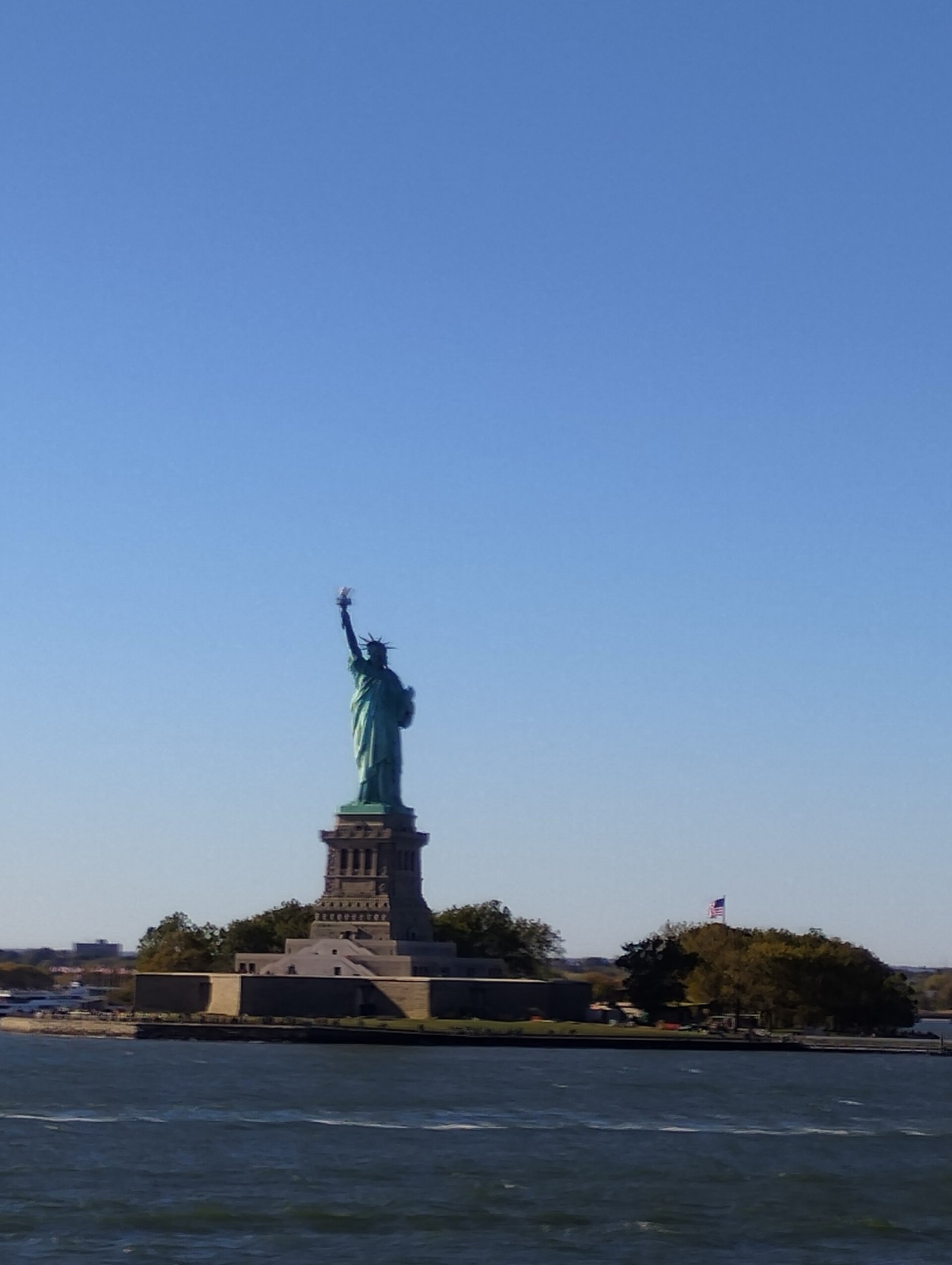
Do not choose a side too early
Route direction, docking sequence, vessel design, weather and crowd distribution affect the view. Advice that promises the “correct” rail can become wrong when operations change. Begin where circulation is comfortable, then move only when it can be done without pushing through a boarding crowd.
Outdoor decks offer open sightlines but also stronger wind, cold, heat and glare. Windows provide shelter and can introduce reflections. A dark sleeve placed near—never against a restricted opening—may reduce interior reflections for a photograph. The simplest choice is often to put the camera down and watch.
Use three distance scales
Near: the vessel and wake
Notice railings, deck levels, safety equipment and how the hull turns. The wake reveals speed and current in a way that a map cannot. Crew work and docking maneuvers are part of a transportation system, not background theater; keep operational spaces clear.
Middle: islands and harbor traffic
Liberty and Ellis islands become three-dimensional only at this scale. Look behind the famous fronts: service buildings, seawalls, tree lines and docks show the practical landscape. Moving vessels establish that the harbor remains infrastructure as well as scenery.
Far: shorelines and skyline
Lower Manhattan is the most recognizable skyline, but New Jersey, Brooklyn, Governors Island and the Upper Bay create the larger geographic frame. Haze can flatten these distances; low angled light can separate them.
Four visual transitions
| Transition | Watch | Question |
|---|---|---|
| Shore to open water | Trees, terminals and seawalls give way to wake | Where does the city’s edge actually end? |
| Icon to structure | Liberty’s silhouette reveals pedestal and copper modeling | When does a symbol become a built object? |
| Façade to complex | Ellis Island expands into connected buildings | How large was the institution behind the Great Hall? |
| Arrival to departure | The same landmark recedes by a different angle | What did the first view hide? |
Weather changes meaning, not just comfort
Fog can remove the skyline and concentrate attention on sound and nearby water. Bright midday sun emphasizes glare and the statue’s green surface. Rain deepens the harbor colors while reducing visibility. Wind makes the boat’s exposed position obvious.
These are not failed viewing conditions, but they require preparation. Protect equipment from spray, use a secure strap and avoid balancing a phone above another passenger. If weather or crew instructions close an outdoor area, accept the indoor view.
Make a four-frame photo sequence
- Departure: include the terminal or shoreline to establish where the trip begins.
- Crossing: keep part of the vessel or wake to show movement.
- Approach: pair the destination with another island, shoreline or working craft.
- Return: photograph the changed relationship instead of repeating the arrival image.
This sequence produces a visual argument rather than four isolated landmarks. It also prevents the entire crossing from being spent with a screen between the visitor and the water.
Keep circulation visible
Rail spaces are shared. Take a frame, step back and let others approach. Do not hold children on barriers, sit on stairs or place bags in doorways. During docking, crew instructions outrank a final photograph. Seabirds should not be fed; dropped food and packaging become harbor waste.
A harbor view is a relationship among moving things. The photograph improves when the observer understands that movement.