- Home
- Weather and access
Conditions notebook / 07
Plan for a moving boat and an exposed island
Downtown weather is only the starting point. Open-water wind, glare, queues, gangways, historic interiors and reserved stair routes shape the physical day.
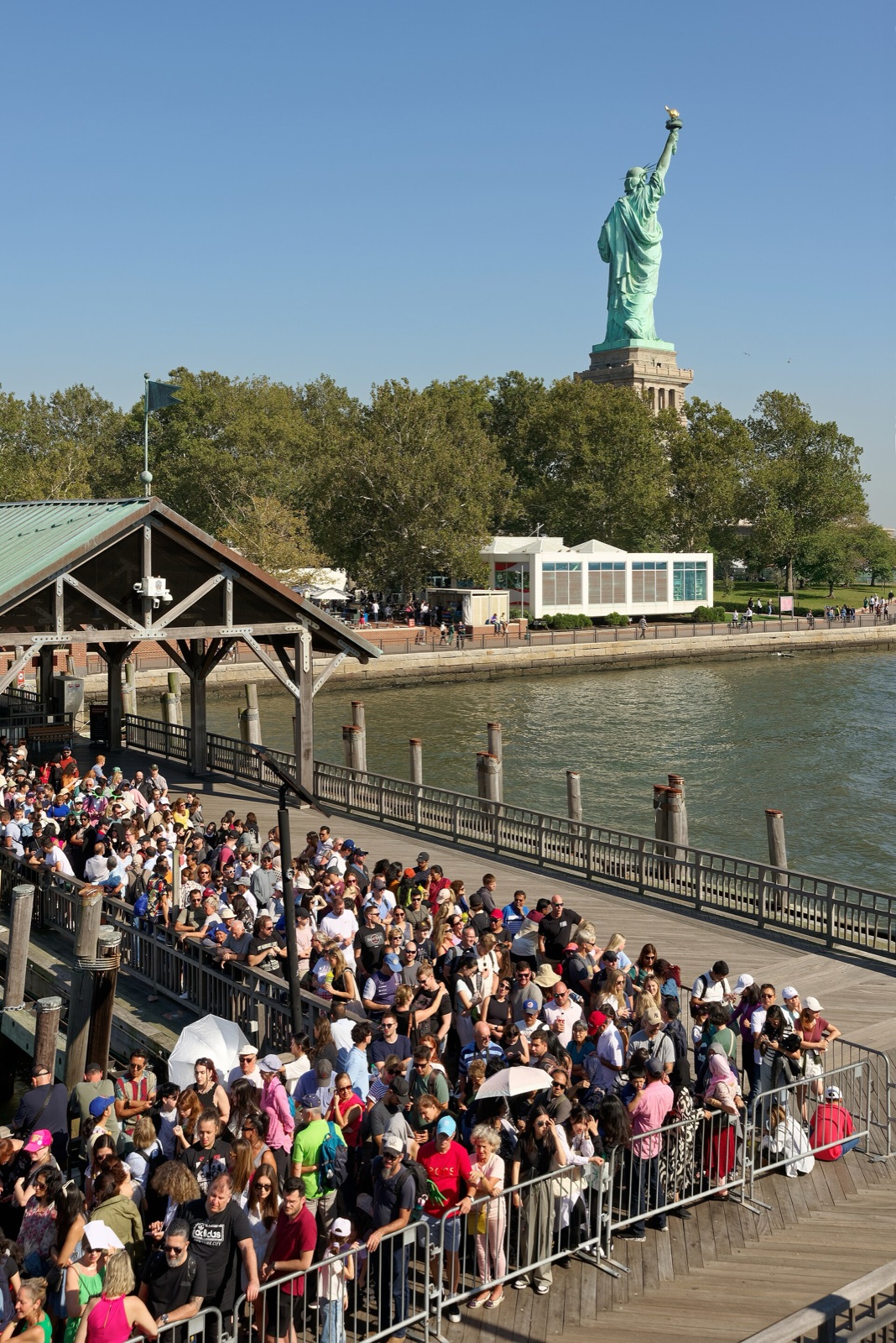
The visit changes environments repeatedly: city transit, outdoor security, ferry cabin, open deck, island promenade, museum galleries and possibly a monument interior. Clothing or mobility planning that works for only one environment leaves predictable gaps.
Wind changes the forecast
The Upper Bay is exposed. A comfortable temperature near buildings can feel cooler on a moving ferry or at an open rail. In summer, limited shade, reflected light and humid air can make queues and promenades hotter than expected. Rain may arrive with wind that defeats a small umbrella.
Dress in layers that can be secured rather than carried loosely. A brimmed hat needs a firm fit. Sunscreen and water matter even when the air feels cool. In colder months, gloves make outdoor viewing more sustainable than a heavy coat alone.
Ferry movement and the boarding gap
Most crossings are short, but boat motion can affect people differently. Stand near a stable support when boarding, keep hands free and follow crew instructions. Gangway angle and movement can vary with tide, vessel and operating conditions; never assume that yesterday’s photograph proves today’s geometry.
Visitors who use wheelchairs, scooters, walkers or other mobility devices should review the operator’s current boarding information and contact it with specific equipment questions. Staff direction at the dock takes priority over a general online description.
Separate island access from monument access
Liberty and Ellis islands include accessible public routes and facilities, but every interior experience is not identical. Crown access uses a narrow stair route and is not accessible to all visitors. Pedestal circulation, elevators, steps and evacuation requirements should be reviewed through the current NPS accessibility page before reservation.
A companion’s needs may affect the whole itinerary. Avoid buying a hard-to-change reservation first and researching suitability later. Ask about the exact segment: security line, boat boarding, island route, museum gallery, pedestal level or crown stair.
| Segment | Question to confirm | Source |
|---|---|---|
| Departure screening | Queue, device screening, permitted items and assistance | Authorized ferry operator |
| Ferry boarding | Gangway, vessel access and device dimensions | Authorized ferry operator |
| Island grounds | Accessible routes, rest areas and current closures | National Park Service |
| Museums | Entrances, elevators, captioning and program accommodation | National Park Service |
| Pedestal or crown | Steps, elevator limits, physical warnings and evacuation | NPS access description plus ticket category |
Sensory and communication planning
Security lines, public-address announcements, engines, crowd noise and echoing historic rooms can create a demanding sensory environment. A quieter break on the grounds may help, but weather and visitor levels affect where that is possible. Bring personal hearing protection if useful and permitted.
Official resources may describe captioning, assistive listening, audio description, tactile material, sign-language interpretation or printed alternatives. Availability differs by program and may require advance arrangement. Confirm the particular service rather than assuming that a general accessibility symbol applies to every exhibit.
Standing and museum fatigue
The physical load comes from accumulation: transit, screening, dock, ferry, promenade, gallery and another ferry. A person who can walk each segment separately may still need scheduled sitting time. Ellis Island in particular encourages long indoor exploration after the outdoor Liberty Island visit.
Use a “one gallery before a break” rhythm instead of waiting for fatigue to make the decision. If the party splits, agree on a clear, permitted meeting point and time; mobile reception and battery level should not be the only coordination plan.
Security and medical essentials
Current prohibited-item and bag rules must be checked with the operator and NPS. Essential medication should remain in a secure, accessible form consistent with screening requirements. Visitors with food, diabetes, allergy or other medical needs should verify what can be carried and where food may be consumed.
Copperline Harbor cannot provide medical advice. Questions about motion sickness, heat, exertion, pregnancy, stairs or an individual condition belong to a qualified healthcare professional and the official operators responsible for the route.
A conditions checklist
- Read NPS alerts and the operator’s service notice on the visit date.
- Check wind, precipitation, heat index and cold exposure for the harbor.
- Confirm the exact mobility or communication service needed for each segment.
- Wear stable shoes and carry a permitted water bottle and secure layer.
- Schedule sitting time before fatigue becomes urgent.
- Leave a mainland buffer after the expected return.