- Home
- Harbor notes
- Statue story
History notebook / 05
The monument was assembled twice: in metal and in meaning
The Statue of Liberty is not one person’s finished idea. Sculpture, engineering, architecture, public fundraising and later interpretation all changed what rose above the harbor.
From a distance, the statue looks solid and inevitable. Up close, it is a thin copper envelope carried by a flexible internal structure, standing on an American pedestal that almost failed to secure funding. Its physical design is a record of collaboration; its public identity is a record of reinterpretation.
An idea before an object
The project developed in nineteenth-century French political and intellectual circles associated with Édouard de Laboulaye, an admirer of American republican ideals and opponent of slavery. Sculptor Frédéric Auguste Bartholdi turned the broad concept into a colossal figure formally titled Liberty Enlightening the World.
It is tempting to summarize this as “France gave America a statue.” The reality involved committees, political advocacy, exhibitions, lotteries, public events and many small donations. French supporters were responsible for the statue, while Americans were expected to provide its pedestal. Neither half simply appeared through a single government check.
Designing for a harbor
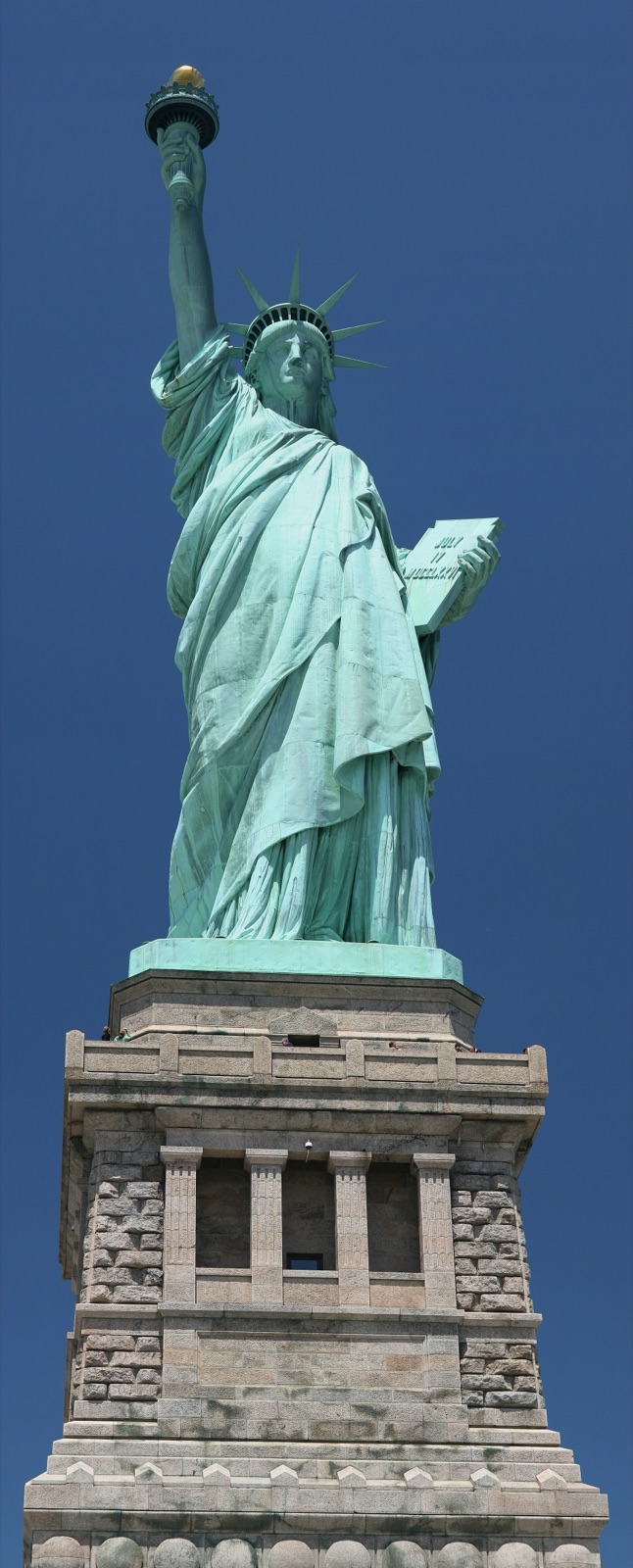
Bartholdi understood that the work would be seen first at a distance and from moving vessels. The raised torch forms a vertical signal. Crown rays produce a readable edge against the sky. Large drapery folds hold their shape across water, while the tablet creates a calmer counterweight to the extended arm.
At her feet, a broken shackle and chain refer to freedom from oppression, although this feature is difficult to see from most visitor positions. The tablet carries the date July 4, 1776 in Roman numerals. These elements joined classical personification to the politics of the American republic.
Copper that could move
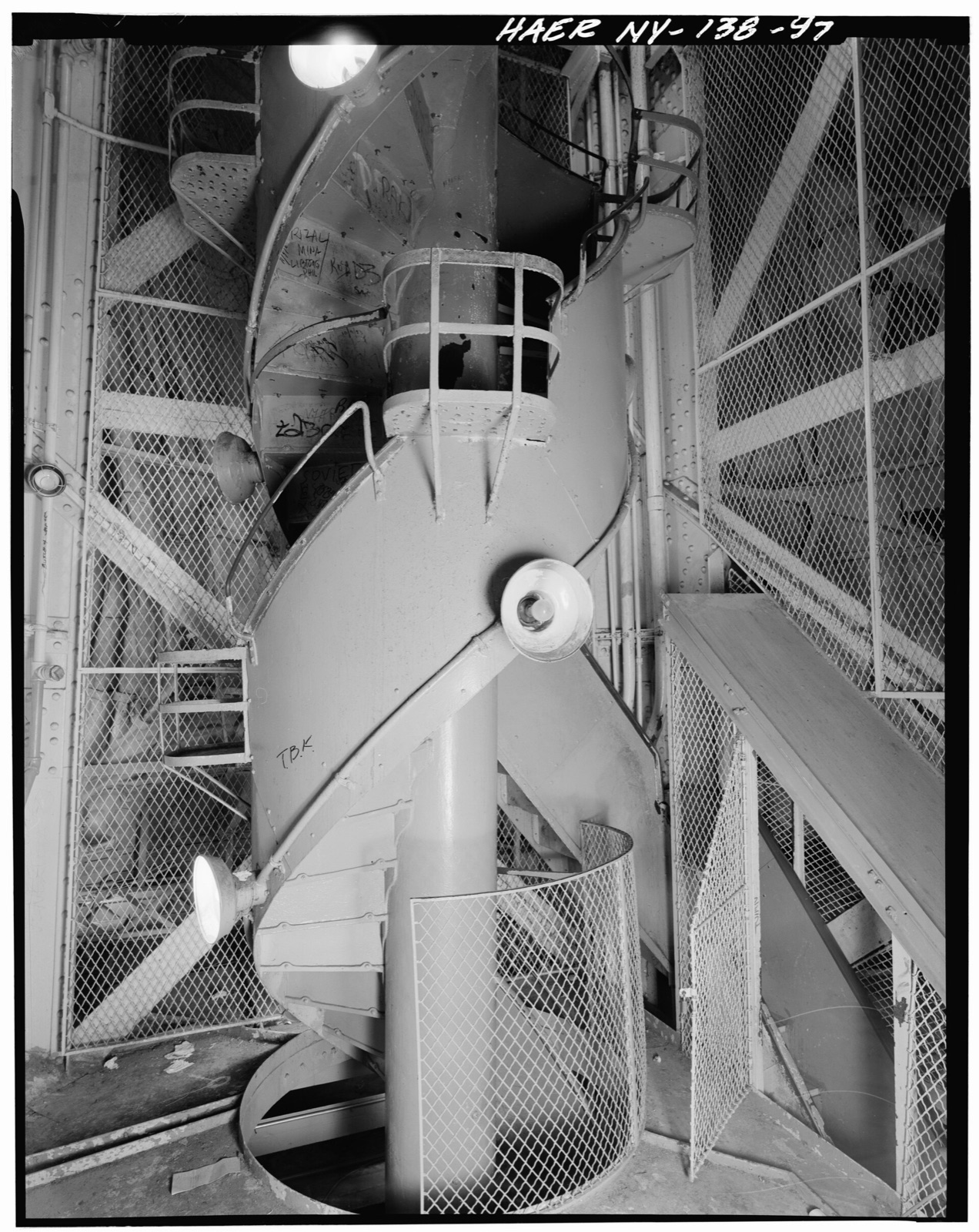
The exterior is not a thick bronze casting. Copper sheets were shaped through repoussé work over forms, producing a lightweight skin. An internal metal system supports that surface while allowing it to respond to wind and temperature rather than behaving as a rigid stone mass.
Engineer Gustave Eiffel’s office developed the iron framework after earlier structural work associated with architect Eugène-Emmanuel Viollet-le-Duc. A central pylon and secondary supports carry the modeled copper. The solution separates skin from primary structure—the feature that makes a monumental figure both large and comparatively light.
The pedestal problem
American architect Richard Morris Hunt designed the monumental pedestal. Funding lagged, leaving the completed French statue waiting while the base remained unfinished. Publisher Joseph Pulitzer used his newspaper, the New York World, to campaign for contributions and printed donors’ names, including many people who gave small amounts.
The pedestal therefore tells a second construction story. Its visual job is to elevate and stabilize the figure, but its fundraising history also made public participation part of the monument’s identity. When visitors stand within Fort Wood’s star-shaped plan, they occupy an older military work adapted to this new civic stage.
Assembly and dedication
The statue was completed in France, disassembled, shipped in crates and reassembled in New York. President Grover Cleveland dedicated it on October 28, 1886. Rain and restricted ceremony marked the day; the symbolic image later became far cleaner than the event itself.
Bartholdi developed and promoted the design while fundraising networks formed.
Emma Lazarus wrote “The New Colossus” for a pedestal fundraising effort.
The assembled monument was dedicated on Liberty Island, then called Bedloe’s Island.
A plaque bearing Lazarus’s poem was installed inside the pedestal.
A major centennial restoration included a new torch and extensive structural work.
Why the statue turned green
The copper surface weathered through oxidation into the green patina now inseparable from the monument’s identity. The patina is not green paint and is not simply evidence of neglect; it forms a protective surface layer. Early photographs and illustrations remind viewers that the statue did not always look as it does now.
Material aging creates a useful paradox. The world-famous color is a product of chemical change, while preservation work aims to manage corrosion, water and structural stress. Maintaining the monument does not mean restoring it to a bright copper appearance.
The immigration meaning arrived later
Emma Lazarus’s sonnet linked the monument to exiles and newcomers through the lines beginning “Give me your tired, your poor.” Written in 1883, the poem was not a speech at the dedication. Its 1903 plaque and the lived experience of harbor arrival helped strengthen the statue’s immigration association.
That meaning sits beside tension. The United States welcomed some migrants while restricting and excluding others; liberty rhetoric coexisted with racial inequality, colonial power and disenfranchisement. A serious reading does not discard the symbol. It asks how ideals, policy and experience diverged.
Restoration is part of authorship
The 1980s centennial restoration replaced deteriorated internal elements and installed a new torch. The original torch can now be seen in the Statue of Liberty Museum. These interventions show that “the original monument” is not a frozen object. Inspection, engineering judgment and replacement have carried it forward.
The statue survives because it can flex physically—and because its meaning has never stopped moving.